Showing posts with label CDs. Show all posts

Friday, June 3, 2016

Tuesday, June 7, 2011

Seniors and Savers Victims of Plunging Safe Money Rates...


According to the Labor Department, there are 24.6 million households headed by people aged 65+ and older.

Most of these folks spent their lives working, raising families, and saving a little from their paychecks. They are risk adverse and dependent on the income from Certificates of Deposits and money market funds.

As of January, the average interest rate paid on these relatively safe vehicles was 0.24%, the lowest on record dating back to 1959.

Americans have $3 trillion in money market funds and $5 trillion in savings accounts. Compared to 2007, the loss of interest income amounts to $350 billion a year, according to Crane Data.

One-year CD rates have plunged during the last 3 years from 3.63% to 0.53%, and Bankrate.com estimates this translates into a loss of $41 billion a year for savers.

Source: Anchor Capital

Wednesday, February 23, 2011

Annuities vs. Certificates of Deposit (CDs)


Annuities and CDs (bank certificates of deposit) are similar in that they are safe, secure investments with guaranteed rate of returns based on interest rates, both issued by large financial institutions, CDs issued by banks, Annuities offered by insurance companies, but they both possess inherent differences as well.

The big differences are that while Annuities offer everything CDs offer, they carry several advantages.

    1. Generally Higher returns
    2. Tax-Deferral
    3. Liquidity
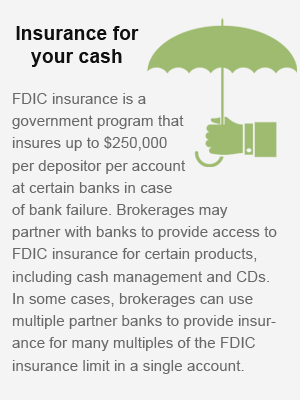
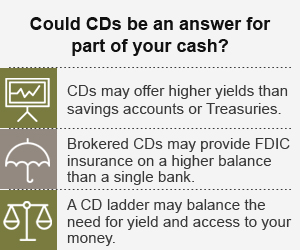
CDs do have FDIC protection to guard against bank or banking industry failure. Annuities also have safety measures put in place by the state to ensure Insurance companies have reserve pools in place.

Insurance companies may also be vetted for financial strength by obtaining their rating from objective rating firms -- Standard & Poor's, Moody's, A.M. Best or Duff & Phelps . The more solid the rating usually equates to a more solid financial backbone for the insurance company.

Higher Returns:
Annuities, like CDs, are hinged to interest rates. But when rates are low so are CD returns whereas annuities have a minimum guarantee in place, usually 3% or 4%. Your investment will never dip below the guaranteed minimum interest rate during times of falling or low interest rates. 


Again, low interest rates mean CD returns will be low as well. To offset the problem of low or falling interest rates, insurance companies equip annuities with guaranteed minimums. This is an agreed minimum rate of interest so that your investment is assured not to fall below the minimum performance even if CD rates do.

Tax-Deferral:
You pay annual taxes on CD interest earned without being able to withdraw funds until your investment term is over. With annuities, there is also a set term, but the earnings are tax-deferred. You only pay taxes on interest earned when money is withdrawn.

So with annuities the deferred tax on your interest remains in the investment earning you more and more money, instead of being paid out to state and federal tax agencies on a yearly basis. 

Liquidity:
CDs do not allow you to withdraw any monies during term. Period. Annuities have provisions that allow you to withdraw money, generally 10% of your account value annually plus many contracts allow you to remove the earned interest on a monthly basis.

Several other annuity contract provisions allow you access to all of your funds such as in the event you are hospitalized, undergoing a life-threatening illness, subjected to a permanent or extended stay in a nursing home, or other major calamities that affect you economically.

In addition, annuities can be structured to pay-out for the life of the owner over a fixed term such as 5 or 10 years, thereby spreading out your tax-burden and providing enhanced income security.

In short, Annuities offer enhanced flexibility... 


Thursday, February 10, 2011

Women Still Underfunded On The Road To Retirement


A Wells Fargo survey about women’s retirement found only slightly more than 50% of middle-class women are confident they will be able to save enough money for retirement.

The survey, which focused on middle-class women from their 20s to 60s, asked questions regarding retirement, the amount of money saved and pensions.

54%
of women, compared with 62% of men who answered the same question, were confident they will have enough saved to last throughout retirement.


Also, only 40% of female respondents believed they would have a pension available to them when they retire, compared with 48% of men.


Both men and women are unprepared financially for retirement, although men have saved a median $5,000 more than women.

The survey also found most married women do not consider themselves the primary financial decision maker, though a majority, 83%, said they do consider themselves a “joint” decision maker, whereas only 58% of married men said they are a joint decision maker.

Another result from the survey shows only 27% of women have confidence in the stock market, compared to 40% for men.

When asked what they would do with $5,000 they had to use for retirement, 40% of the women said they would buy bank CDs, instead of investing it in the stock market, compared to 30% of men.


Source: Wells Fargo, Businesswire.com


Thursday, January 14, 2010

Annuities vs. Certificates of Deposit (CDs)


Annuities and CDs (bank certificates of deposit) are similar in that they are safe, secure investments with guaranteed rate of returns based on interest rates, both issued by large financial institutions, CDs issued by banks, Annuities offered by insurance companies, but they both possess inherent differences as well.

The big differences are that while Annuities offer everything CDs offer, they carry several advantages.

    1. Generally Higher returns
    2. Tax-Deferral
    3. Liquidity
CDs do have FDIC protection to guard against bank or banking industry failure. Annuities also have safety measures put in place by the state to ensure Insurance companies have reserve pools in place.

Insurance companies may also be vetted for financial strength by obtaining their rating from objective rating firms -- Standard & Poor's, Moody's, A.M. Best or Duff & Phelps . The more solid the rating usually equates to a more solid financial backbone for the insurance company.

Higher Returns:
Annuities, like CDs, are hinged to interest rates. But when rates are low so are CD returns whereas annuities have a minimum guarantee in place, usually 3% or 4%. Your investment will never dip below the guaranteed minimum interest rate during times of falling or low interest rates. 


Again, low interest rates mean CD returns will be low as well. To offset the problem of low or falling interest rates, insurance companies equip annuities with guaranteed minimums. This is an agreed minimum rate of interest so that your investment is assured not to fall below the minimum performance even if CD rates do.

Tax-Deferral:
You pay annual taxes on CD interest earned without being able to withdraw funds until your investment term is over. With annuities, there is also a set term, but the earnings are tax-deferred. You only pay taxes on interest earned when money is withdrawn.

So with annuities the deferred tax on your interest remains in the investment earning you more and more money, instead of being paid out to state and federal tax agencies on a yearly basis. 


Liquidity:
CDs do not allow you to withdraw any monies during term. Period. Annuities have provisions that allow you to withdraw money, generally 10% of your account value annually plus many contracts allow you to remove the earned interest on a monthly basis.

Several other annuity contract provisions allow you access to all of your funds such as in the event you are hospitalized, undergoing a life-threatening illness, subjected to a permanent or extended stay in a nursing home, or other major calamities that affect you economically.

In addition, annuities can be structured to pay-out for the life of the owner over a fixed term such as 5 or 10 years, thereby spreading out your tax-burden and providing enhanced income security.

In short, Annuities offer enhanced flexibility...