Showing posts with label El-Erian. Show all posts
Showing posts with label El-Erian. Show all posts
Thursday, September 1, 2011
Quote of The Day: "The world economy is now in the grips of..."
"The world economy is now in the grips of a damaging feedback loop involving deteriorating fundamentals, lagging policy responses and destabilised financial markets.
If policymakers do not act boldly, and do so in a globally-coordinated fashion, the world risks tipping into a prolonged recession with worrisome institutional, political and social consequences."
Mohammed El-Erian, Pimco


Friday, August 20, 2010
Pimco's El-Erian: Investors Should Prep for 'Major Structural Changes'
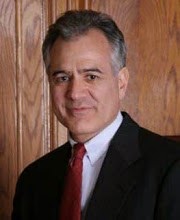
Investors should prepare for “major structural changes” as the economy shifts to consistently slower global growth, according to Mohamed A. El-Erian, chief executive officer at Pacific Investment Management Co.
“Forget about being hostage to mindsets that are very cyclical and look broader, because there are some major structural changes -- there's some major realignment both at the national level and at the global level,” he said in a radio interview today on “Bloomberg Surveillance” with Tom Keene. “When you are on a bumpy journey to a new normal, the unthinkable and the improbable become probable.”
Global growth will be below average during the next 3 to 5 years as developed economies struggle with mounting deficits and increased regulation in the wake of the 2008 collapse of credit markets, according to Pimco.
“Forget about being hostage to mindsets that are very cyclical and look broader, because there are some major structural changes -- there's some major realignment both at the national level and at the global level,” he said in a radio interview today on “Bloomberg Surveillance” with Tom Keene. “When you are on a bumpy journey to a new normal, the unthinkable and the improbable become probable.”
Global growth will be below average during the next 3 to 5 years as developed economies struggle with mounting deficits and increased regulation in the wake of the 2008 collapse of credit markets, according to Pimco.
Pimco's investment strategy has been to shift to higher- quality assets and pursue investments in different parts of the world, El-Erian said.
The $234 billion Total Return Fund managed by Pimco co- founder Bill Gross has returned +13% the past year, beating 64% of its peers, according to data compiled by Bloomberg.
The Federal Reserve's decision to reinvest principal payments on mortgage holdings into Treasuries didn't assuage investor concern, and the central bank may not have the appropriate tools to address all of the economy's problems, according to El-Erian.
“We should not over-depend on the Fed,” he said. “The Fed does not have enough instruments for what we're looking at. You need other agencies to get involved. We're not getting any structural solutions.”
The Fed reversed plans on August 10 to exit from aggressive monetary stimulus and decided to keep its bond holdings level to support an economic recovery that it described as weaker than earlier anticipated. Central bankers adopted a $2.05 trillion floor for their securities portfolio, pivoting toward a quantitative target for monetary policy.
Pimco, which has been synonymous with bonds for almost 4 decades, in the past year has created an equity mutual fund and a unit to invest in hedge, real estate and buyout funds. Newport Beach, California-based Pimco has also started 10 exchange- traded funds.
The company, which managed more than $1.1 trillion of assets as of June 30, according to its website, is a unit of the Munich-based insurer Allianz SE.
Pimco's El-Erian: Investors Should Prep for 'Major Structural Changes'
Thursday, May 20, 2010
The Latest from Mohammed El-Erian of PIMCO on the New Normal Global Economy
We are living through a remarkable time of change for the global economy, where several anchoring parameters have become variables.
It is a time of friction, collisions and renewal as we journey to a de-levered and re-regulated world with weaker growth dynamics in industrial countries and less political enthusiasm for unfettered globalization and markets.
This brings us back to the image of a car that, having used its spare tire(s), is still embarked on a bumpy road through unfamiliar territory and to a less-than-stable destination. Parts of the car are up for this journey; others will likely hold up but in a tentative and fragile manner; and yet others will fail.
For investors, this translates into a secular period of changing risks and opportunities:
It is a world where several of the old simplifying adages that once brought comfort to investors – such as industrial country governments constitute interest rate risk while emerging economies involve credit risk – require considerable refinement;
It is a world that calls for a broader investment universe and guidelines and, for those who use them, revamped benchmarks that better capture the world of today and tomorrow rather than that of yesterday;
It is a world of significant country, regional and instrument differentiation when it comes to harvesting equity and credit premiums in high-quality corporates, financials and emerging markets;
It is a world where the currencies of the emerging (as opposed to submerging) economies will continue to warrant a greater allocation over time; and
It is a world where the safest of carry will come from duration and curve in sovereigns that, due to their economic and financial fundamentals, are truly core countries in the midst of this global paradigm shift.
Look for PIMCO to continue to work hard on your behalf to combine all this with cyclical considerations and to translate them into the appropriate positioning of your portfolios, consistent with your return objectives and risk tolerance.
Look for us to provide you with the information, expertise and investment solutions that capture the evolution of both the journey and the destination.
And look for us to continue to position our business so that we can provide you sustained value in this changing historical context.
Mohammed El-Erian of PIMCO
http://advisorperspectives.com/commentaries/pimco_051310.php
It is a time of friction, collisions and renewal as we journey to a de-levered and re-regulated world with weaker growth dynamics in industrial countries and less political enthusiasm for unfettered globalization and markets.
This brings us back to the image of a car that, having used its spare tire(s), is still embarked on a bumpy road through unfamiliar territory and to a less-than-stable destination. Parts of the car are up for this journey; others will likely hold up but in a tentative and fragile manner; and yet others will fail.
For investors, this translates into a secular period of changing risks and opportunities:
It is a world where several of the old simplifying adages that once brought comfort to investors – such as industrial country governments constitute interest rate risk while emerging economies involve credit risk – require considerable refinement;
It is a world that calls for a broader investment universe and guidelines and, for those who use them, revamped benchmarks that better capture the world of today and tomorrow rather than that of yesterday;
It is a world of significant country, regional and instrument differentiation when it comes to harvesting equity and credit premiums in high-quality corporates, financials and emerging markets;
It is a world where the currencies of the emerging (as opposed to submerging) economies will continue to warrant a greater allocation over time; and
It is a world where the safest of carry will come from duration and curve in sovereigns that, due to their economic and financial fundamentals, are truly core countries in the midst of this global paradigm shift.
Look for PIMCO to continue to work hard on your behalf to combine all this with cyclical considerations and to translate them into the appropriate positioning of your portfolios, consistent with your return objectives and risk tolerance.
Look for us to provide you with the information, expertise and investment solutions that capture the evolution of both the journey and the destination.
And look for us to continue to position our business so that we can provide you sustained value in this changing historical context.
Mohammed El-Erian of PIMCO
http://advisorperspectives.com/commentaries/pimco_051310.php
Monday, March 29, 2010
Global Growth Paradigm Shift Forthcoming
Mohamed El-Erian, Co-CEO of PIMCO, was on CNBC’s Squawk Box in March 2010 and talked about his view of what PIMCO has dubbed “The New Normal” in the investing world.
In sum, El-Erian’s view is that we are seeing a “Paradigm Shift” in growth from the advanced economies of the world such as the U.S. and the U.K. to the emerging countries such as China, India, Brazil, and the like.
“We will see a continuous migration of wealth and growth dynamics from advanced economies to the rest of the world,” El-Erian told the CNBC audience.
The said he expects to see "a multi-speed world" where "part of the world is going to grow and grow robustly. There's going to be another part, the U.S. and U.K., that is going to have difficulty once all the stimulus and inventory cycle goes through."
Friday, December 11, 2009
Q&A: Pimco's Mohamed El-Erian - Courtesy of Fortune Magazine
Pimco's CEO says individual investors must change their investing style, such as being less U.S.-centric.
By Geoff Colvin, senior editor at large
 Pimco, the world's largest bond investor, has benefited from investors' flight to quality over the past two years and now manages about $1 trillion in assets.
 Mohamed El-Erian, 51, is still thinking large and deep thoughts; his book, "When Markets Collide: Investment Strategies for the Age of Global Economic Change," won the Financial Times Goldman Sachs business book of the year award last year.
Mr. El- Erian sat down recently with Fortune's Geoff Colvin to talk about threats to individual investors, the best framework for an investment portfolio, how the 2008 financial meltdown was like a double-drive-through McDonald's, and much else.
Here's a sampling of some of the questions....
 We've had one quarter of solid economic growth. Is the recession over?
 Why are a lot of very positive things unlikely to occur for the consumer?
If American consumers start saving more, isn't that a good thing?
From the perspective of an individual investor, is the multipolar world a good thing or a bad thing?
What are the most important things that individual investors need to do differently?
What's the best protection for an individual investor against inflation?
In your book you present an asset allocation for a typical U.S. investor. Only 15% is in U.S. equities, which is much less than most U.S. investors hold. And only 14% is in bonds, U.S. and non-U.S., which seems like not very much. What's the logic?
You've said that this asset allocation -- which includes many other elements [see table] -- could be expected to return +5% to +7% a year in real terms over the long run. Many investors believe that U.S. equities will return much more over time. Is that just not correct?
A lot of new financial regulation is in the works. Is it going to be, as it so often is, regulation that will prevent the crisis that just happened and not regulation that will prevent the next crisis?
After the September 2008 crisis, you mentioned in Fortune that you'd asked your wife to withdraw cash from the bank. What was your life like?
What's your bottom line advice to individual investors in today's environment?
Full Interview - Click Here: Investing Advice from Mohamed El-Erian: Q&A with Fortune - Dec. 10, 2009
Subscribe to:
Posts (Atom)