Showing posts with label 401(k). Show all posts

Friday, March 10, 2017

Assessing 401k Fees and Rollover Options


401k Fees and Rollover Options


401k Fees could erode your retirement savings as much as -30% over time. 

Understanding the fees associated with your retirement accounts is typically very difficult.

But, if you don’t know or understand how much you’re paying in fees associated with different investment options, how can you know if you’re overpaying for certain funds and limiting retirement balances from increasing more fully?

Phyllis Borgi, the Assistant Secretary of Labor for Employee Benefits Security, said that she was troubled by the complex fee disclosure format that some companies have put out.

Some companies have tried to hide, confuse, or be very non-specific in their disclosure of these fees.

The U.S. Department of Labor reports 401k accounts typically charge fees of 1%–2% for administration and management fees. These fees are deducted from your retirement savings every year on the full value of your account even if your account loses value. 

Fees of 1%-2% may seem trivial, but over 20-30 years - even at just 1% - this means 20%-30% less money at retirement, and 20%-30% less income at retirement.

This could cost you hundreds of dollars each month for the rest of your life.

401k Rollover to a Self-Directed IRA may be an option for you, even if you are still employed with the company. 

If you are aged 59½ or older and looking to keep your retirement savings in a safe and secure, contractually guaranteed account, a fixed-indexed annuity could be a viable option.


Tuesday, February 5, 2013

10 Biggest Retirement Mistakes: #2. Taking A 401(k) Check


If you decide to transfer your 401(k) or other retirement assets to an IRA, make sure they go directly to the new custodian.

If your employer cuts you a check, the company will be required to withhold 20% for taxes and you will have to roll the entire amount — including the 20% you didn't receive — into an IRA within 60 days.

Any money not deposited into the IRA would be treated as a taxable distribution, subject to taxes and early-withdrawal penalties.


Thursday, January 31, 2013

10 Biggest Retirement Mistakes: #4. Mishandling Company Stock


Rolling your 401(k) into an IRA is generally a good idea, but it may not be the right decision when you own highly appreciated company stock inside your plan.

A special rule for what is called “net unrealized appreciation” allows you to move your employer’s stock out of your 401(k) when you retire or leave your job.

You must follow the rules precisely to take advantage of lower capital gains rates, rather than ordinary income taxes, when you sell the stock.


Wednesday, November 14, 2012

10 Biggest Retirement Mistakes: #6. Tapping Retirement Accounts Too Soon


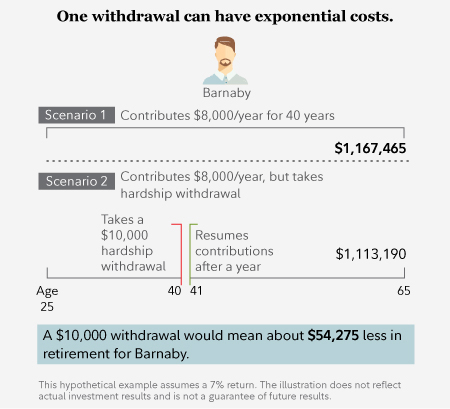
If you tap your retirement funds before age 59 1/2, you'll owe 
a -10% early-withdrawal penalty on top of the federal and state income taxes you'll pay on each distribution.

But if you are at least 55 when you leave your job, you can take distributions from your 401(k) without paying a penalty (although you will still owe income taxes on your withdrawals).

If you transfer your funds to an IRA, you lose the “55-and-out” option.


Tuesday, October 9, 2012

10 Biggest Retirement Mistakes: #9. Ignoring Minimum Distribution Rules


You are required to start withdrawing from your IRA by April 1 following the year you turn 70 1/2, and to take withdrawals by December 31 of that year and each year afterward. 
Miss the deadline and you’ll owe a tax penalty of 50% of the amount you failed to withdraw. You can skip the required distribution from your 401(k) is you are still working, but not your IRA.


Wednesday, August 11, 2010

The Retirement Outlook is Distressing for Many...


7 out of 10 (71%) of adults aged 25 and older said they were personally in control of their finances and make financial decisions themselves.

45% believe poor financial markets will leave them with less money in retirement.

Half of those who are not yet retired (48%) believe they will not have enough money to maintain their current lifestyle in retirement.

Half of those already retired (53%) are concerned about their current financial situation.

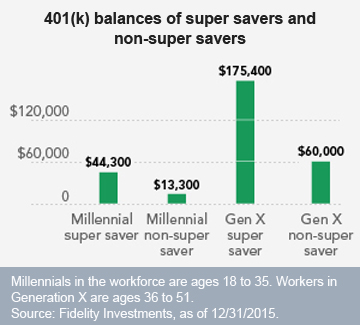
Half of those with 401(k)s have balances of less than $5,000!

7 out of 10 adults not yet retired (69%) say they have a lot more to do financially before they are ready to retire.


Tuesday, March 16, 2010

5 Reasons to Roll a 401(k) into an IRA


Why would a 401(k) participant want to move his money out of a 401(k) and roll it into an IRA? Here are reasons why:


1. Most 401(k) s and other company plans have limited investment options. They may offer 50 different mutual funds and other investments options, but most of the options are subject to market fluctuations. If we learned anything in 2008 and early 2009, it’s that what the market gives can be taken away with little to no warning. Many of these accounts lost as much as -40% in 2008 alone. Those who chose to play it safe and moved their 401(k) money into bond funds or funds invested in CDs and other short-term investments were rewarded with little or no growth while inflation and management fees ate away at their principal. IRAs have almost unlimited investment options including annuities that guarantee the principal and offer a competitive rate of return.


2. Plan guidelines can restrict the owner’s access to his money. The plan document is essentially the 401(k) rulebook. If it’s not in the book, you can’t do it! With savings down and unemployment up, you never know when you may need access to your retirement accounts. IRAs offer greater flexibility, allowing the owners to make their own rules if they are willing to pay the tax on the distributions.


3. Direct rollovers avoid the 20 percent mandatory withholding. It’s critical that the funds are moved as a trustee-to-trustee transfer. If a check is written to the 401(k) owner, you can count on the custodian withholding 20% for the IRS. I have worked with several advisors who have encountered this problem, and they are still battling with the IRS to get the 20% withholding back where it belongs.


4. 401(k) s have limited distribution flexibility for the children and grandchildren who are likely to inherit when both the owner and spouse are gone. In 2002 when the multi-generational/“stretch” IRA was born, the children and grandchildren were given new valuable distribution options. They now have the right to spread the inherited IRA distributions over their individual life expectancies, according to Appendix C, Table 1 of IRS Publication 590. This means they are no longer forced into rapid distribution, causing rapid taxation. The 401(k) plan administrators didn’t get on board with this valuable income planning tool and are, in many cases, forcing these non-spousal beneficiaries to take full taxable distribution in just five years. Under the “Worker, Retiree and Employer Recovery Act” of 2008 (HR 7327), all employer plans will be required to allow non-spousal beneficiaries to do direct rollovers to properly titled inherited IRAs beginning January 1, 2010. IRAs allow these beneficiaries to take control and choose between cashing out and receiving a lifetime of income.


5. Most 401(k) plans do not allow the Roth IRA conversion. Beginning this year IRA owners with adjusted gross incomes over $100,000 can for the first time convert their traditional IRAs to Roth IRAs. After the conversion tax is paid, the new Roth will grow tax-free and distributions after the 5-year holding will also be income tax free. The Pension Protection Act simplified Roth conversions from 401(k) s and other company sponsored plans. Beginning in 2008, owners can convert company sponsored plan funds directly to a Roth IRA. They no longer need to convert to a traditional IRA first then convert the traditional IRA to a Roth IRA.