Showing posts with label medicare. Show all posts

Friday, February 24, 2017

CBO: Social Security Trust Fund Gone In 2029


webA1bdgt0617_1K

The problem is that entitlement spending will grow faster than the economy and tax revenue, fueled by an aging population, rising health care costs and expanding ObamaCare enrollment.


Read More At Investor's Business Daily:
http://news.investors.com/politics/061615-757616-social-security-trust-fund-ends-in-2029-autopilot-spending.htm#ixzz3dLzNQCpA 


Wednesday, February 15, 2017

How Medicare Taxes Impact Upper-Income People


When you hear "Medicare Taxes," you probably don’t think about your investments. 

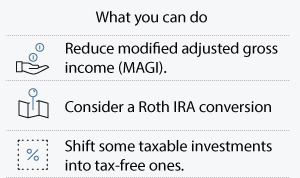
But these taxes affect many upper-income Americans with higher taxes on both wages and investment income. All the more reason to have a tax-smart financial plan in place.
What you can do

There are TWO ways the Medicare Taxes affect upper-income people. 

First, a 3.8% Medicare surtax is levied on the lesser of net investment income or the excess of modified adjusted gross income (MAGI) above $200,000 for individuals, $250,000 for couples filing jointly, and $125,000 for spouses filing separately. 

Second, wages above $200,000 (individuals), $250,000 (joint filers), and $125,000 (spouses filing separately) will be subject to higher payroll taxes. 


Friday, November 21, 2014

Medicare: 7 Things You Don't Know - #1. Not Everything Is Covered


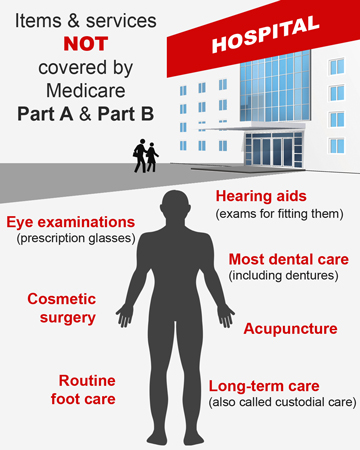
Couples retiring at age 65 this year are expected to incur $220,000 in out-of-pocket health care costs on average during their retirement years, INCLUDING deductibles, co-payments and services NOT covered by Medicare such as dental, vision and podiatry expenses. 

The estimate DOES NOT include L
ong-Term Care (LTC) costs.

Source: Fidelity Investments’ 2014 Retirement Health Care Cost Estimate.


Friday, November 7, 2014

Medicare: 7 Things You Don't Know - #3. Health Savings Accounts No Longer Apply


Consumers can enroll in Medicare Part A, which covers hospitalization and is FREE, when they turn 65.

But once they enroll, they will NO longer be able to contribute to a Health Savings Account (HSA).


Friday, October 31, 2014

Medicare: 7 Things You Don't Know - #4. Part B Coverage Can Be Postponed

Consumers can postpone signing up for Medicare Part B, which covers doctors’ visits and outpatient services, if they have group health insurance from their current employer or their spouse’s current employer.

Medicare Part B costs most beneficiaries $104.90 per month in 2014.


Friday, October 24, 2014

Medicare: 7 Things You Don't Know - #5. URGENT! The Self-Employed Must Sign Up During the Initial Enrollment Period!


Those who are Self-Employed OR who work for small firms with 19 or fewer employees MUST sign up for Medicare Part B during the INITIAL 7-month enrollment period based on the date of their 65th birthday.


If they miss the deadline
, they could be on the hook for 80% of their medical costs until Medicare coverage begins and face PERMANENTLY increased premiums.


Friday, October 17, 2014

Medicare: 7 Things You Don't Know - #6. Latest Tax Returns Determine Premium Surcharges


Monthly premium surcharges for Medicare Part B and Part D prescription drug plans are based on the latest tax return.

So your 2012 Tax Return filed in 2013 is the basis for the Medicare premiums you pay in 2014.

   These brackets are NOT adjusted for inflation, meaning more retirees could drift into the higher premium brackets each y
ear.


Friday, October 10, 2014

Medicare: 7 Things You Don't Know - #7. Not All Investments Count As Income


A handful of investment products are NOT counted as INCOME by Medicare. 

They include distributions from health savings accounts and Roth IRAs and Roth 401(k) plans;
proceeds from a reverse mortgage; income and loans from cash-value life insurance; and certain distributions from annuities in non-qualified accounts.


Wednesday, February 6, 2013

10 Biggest Retirement Mistakes: #1. Not Planning for Medical Costs in Retirement


If you retire before you are eligible for Medicare at 65, finding health insurance can be difficult and expensive.

Many employers have eliminated subsidized retiree health benefits for former employees. You can extend employer coverage under COBRA for up to 18 months, but you’ll have to pay the full premium without any help from the boss.

Depending on your health, it might be cheaper to find an individual policy with a high deductible.


Thursday, October 25, 2012

10 Biggest Retirement Mistakes: #8. Failing to Sign Up for Medicare Part B on Time


Once you are eligible for Medicare, you must enroll in Medicare Part B, which covers doctor’s visits and outpatient services, within three months of turning 65 or incur a late-enrollment penalty that permanently boosts your Part B premium by 10% for every year you delay.

The penalty is waived if you have health insurance from your or your spouse’s current employer, but is retroactive if you don’t enroll soon after your coverage ends.